Legacy Giving
Build a Future of Hope and Opportunity for Generations to Come
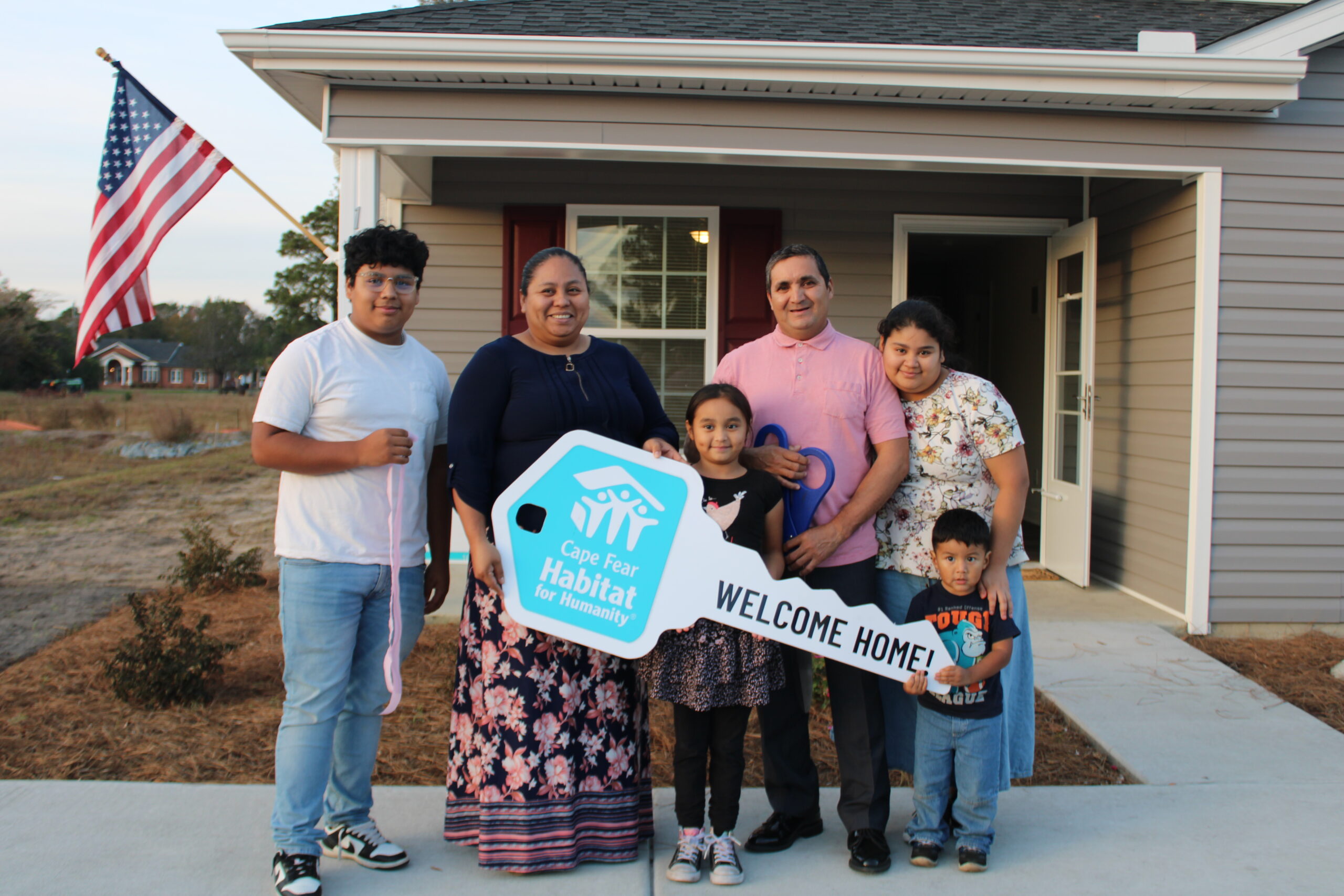
When you contribute a legacy gift, you’re not just making a donation—you’re creating a lasting impact that extends beyond your lifetime. By including Habitat in your estate planning, you will leave a lasting mark on the lives of families in need and help build a stronger, more resilient community.
Types of Legacy Gifts
You can designate Cape Fear Habitat for Humanity as the beneficiary of your assets by will or trust.
The most common form of planned gift to support Cape Fear Habitat is a bequest contained in one’s will or revocable (living) trust. Below is an example of how a bequest to benefit Cape Fear Habitat for Humanity may be worded:
I give, devise and bequeath to Cape Fear Habitat for Humanity, EIN 56-1555858, a qualified 501(c)(3) charitable organization located in Wilmington, NC, _____ percent of my residual estate (or a specific bequest of $____________). All bequests will be directed to where the need is greatest.
Please see an attorney for additional support in creating a will or trust. For definitions, please scroll to the bottom of this page.
Congress has enacted a permanent IRA charitable rollover; as a result, you can make an IRA rollover gift this year and in future years.
If you are 70 1/2 or older, you may be interested in a way to lower the income and taxes from your IRA withdrawals. An IRA charitable rollover is a way you can help continue our work – and benefit yourself!
Contact your IRA administrator and ask them to direct all or part of your required distribution to Cape Fear Habitat for Humanity and you and your heirs will not pay taxes on the amount gifted directly from the IRA.
Donating part or all of your unused retirement assets, such as your IRA, 401(k), 403(b), pension, or other tax-deferred plan, is an excellent way to make a gift to Cape Fear Habitat.
If you are like most people, you probably will not use all of your retirement assets during your lifetime. You can make a gift of your unused retirement assets to help further our mission.
You can designate us as a beneficiary of a retirement, investment or bank account or your life insurance policy. Just ask the plan administrator for a designation form to update.
You can name Cape Fear Habitat for Humanity as a primary or contingent beneficiary of a life insurance policy. If the donor retains any control over the policy, no income tax deduction is allowed. However, if Cape Fear Habitat for Humanity is named both the sole owner and the beneficiary of a paid-up policy, the donor may receive an immediate charitable deduction for the lesser of the policy’s fair market value or the net premiums paid and additional premiums paid by the donor may also be tax deductible.
You may receive numerous tax and financial benefits by creating a “life income gift,” such as a charitable gift annuity or charitable remainder trust.
The donor makes an irrevocable contribution of assets to fund the trust or annuity, gets an immediate income tax deduction for part of the contribution’s value, and receives income for life or a term of between 1-20 years. When the trust or annuity term ends, the remaining assets can be directed to support Cape Fear Habitat for Humanity.
You transfer your cash or appreciated property to your financial institution in exchange for their promise to pay you fixed payments (with rates based on your age) for the rest of your life. At the end of your life, the balance is sent to Cape Fear Habitat in your name to further our mission.
You transfer your cash or appreciated property to fund a charitable remainder annuity trust. The trust sells your property tax-free and provides you with fixed income for life or a term of years.
You transfer your cash or appreciated property to fund a charitable remainder unitrust. The trust sells your property tax-free and provides you with income for life or a term of years.
Gifts of appreciated homes, farms and other real property can receive the same tax treatment as gifts of securities – a full fair market value deduction and no tax on the capital gain.
If the debt-free property is donated to Cape Fear Habitat for Humanity, the gift is deductible at the property’s appraised value. It is sometimes possible to donate a partial interest in property, such as a percentage of ownership or mineral rights. CFHFH has an intermediary that handles this on our behalf. If this is something you wish to consider, please reach out to us and we will connect you. We cannot accept a prearranged sales agreement.
We purchase your property for less than fair market value. You receive cash and a charitable deduction for the difference between the market value and purchase price.
You give your property to Cape Fear Habitat, but retain the right to use the property during your life.
Why Leave a Legacy?

1. Empower Future Generations
2. Support Our Mission
Your contribution will support ongoing and future Habitat projects, allowing us to reach more families and strengthen our community. With a legacy gift, you ensure our work continues to expand throughout the region and make a difference.
3. Honor Your Values
Your Gift is More Than a Donation. It’s a Symbol of Hope.
Every legacy gift, no matter the size, helps us build a future where families can thrive in safe, stable homes. Your generosity is a testament to your commitment to changing lives and building a stronger, more resilient community.
Contact Us to Learn More
If you would like to discuss other ways to make a legacy gift and leave a lasting impact in the Cape Fear region, please contact Rich Duncan at 910-762-4744 ext. 106.
We’re here to guide you in planning a gift that honors your wishes and achieves the greatest impact.
Planned Giving Resources
Download this brochure to learn the different ways to give to Cape Fear Habitat.
FreeWill is a free service that allows you to create wills, advance healthcare directives, and other documents for free online.
Download this easy-to-use workbook guiding you through making a will.
Take it to your attorney meeting to be one step ahead in your planning.
Visit this Novant webpage to learn more about creating advance directive forms.
This link takes you to a Power of Attorney template created by the UNC School of Government. Please review this with your legal counsel.
Complete this form to establish a pet directive.
Download this editable Disclaimer of Inheritance form.
Will
A will is a legal document that lists:
- Who receives your assets after you die
- Who will serve as executor of your estate
- Who will be the guardian of minor children
- How debts and taxes should be paid
Key points:
- Takes effect only at death
- Goes through probate (a court-supervised process)
- Becomes part of the public record in most states
- Generally, less expensive and simpler to create
Trust
A trust is a legal arrangement where assets are held by a trustee for the benefit of beneficiaries.
Key points:
- Can take effect while you are alive
- Assets placed in a properly funded trust generally avoid probate
- Provides greater privacy because trusts typically do not become public records
- Can continue managing assets if you become incapacitated
- Usually costs more to establish and requires transferring assets into the trust
All these documents are provided as a service. We recommend consulting your attorney or financial planner to see which avenue is best for you, and to adapt these documents to your specific needs. These resources are not to be considered legal or financial advice or direction. Cape Fear Habitat for Humanity would like to thank Novant for their partnership in allowing us to provide links to their free resources, as well as Colin D. Williams, a Trust and Estate Attorney at Ward and Smith, P.A., for his volunteerism and support.

Quick Links
ReStores
7330 Market Street
Wilmington, NC 28411
(910) 686-9842
Monkey Junction ReStore
6138 Carolina Beach Road
Wilmington, NC 28412
(910) 660-4400
Administrative Offices
(910) 762-4744
FAX: (910) 762-0734
info@capefearhabitat.org
Donation Hotline
(910) 686-9800